

Crash Bandicoot turns 25 – How Naughty Dog turned Willie the Wombat into a PlayStation icon - parkeywhicess
Clash Bandicoot turns 25 – How Naughty Dog changed Willie the Wombat into a PlayStation icon
For those who lived it, the launch of the PlayStation was an exciting time for the computer game industriousness. Non solely because of Sony's new upstart console, just rather because the 16-bit multiplication that had preceded IT had proven the value of gaming and straightaway was the time for the industry to transition from toddler to adolescent. This meant true 3D gaming, this meant mainstream acceptance merely, many than anything, it meant an increased interest from all avenues. Hollywood, in particular, had become enthused past this new material body of entertainment and with Sony acquiring involved, it was time to come to the fore. This, as it happens, is how Crash Bandicoot came to make up: from the interest of World-wide and a happenstance meeting betwixt a pair of developers who, back past, weren't quite the big names they are now.
"Skip Alice Paul [then vice President of production at Universal Studios] had the vision to get into the video game business, and at that time all the studios were somewhat opening up divisions," explains David Siller, one of the key producers on the original Crash Bandicoot. "Well anyway, Skip gets Universal to agree to invest up money to embark on this partition." What this meant was a huge injection of cash for what would get ahead Universal Interactive, giving the keep company the opportunity to invade the video games market and, as Siller suggests, go for to one day make games – and even interactive movies – based along Universal's existing franchises. As so much Universal Interactive was raring to buy ahead small, independent developers that it intended to use of goods and services to bring this future into fruition and the Hollywood studio really was throwing money at the challenge.
Spicy Dog's big challenge
Sexy Dog, having yet to find a hit, had gone big on the 3DO, with Jason Rubin and Andy Gavin investment in a development kit for the console in the hopes of making information technology large-mouthed. Their game, Way of life of the Warrior, had been one and only of the key titles that 3DO wanted to display at CES, delivery the duo into the expo to show information technology off. As luck would have it Naughty Dog establish itself running a kiosk moral next to Universal and, all over the course of the days that followed, ended up outstanding a shell out with Mark Cerny and Rob Biniaz who was in charge of getting Universal Mutual off the ground. "It was one of those things that they were in the right place at the right time for their future," says Siller, and without that chance it's unconvincing Naughty Dog would ever have become the household name it is today. "Naughty Frump lucked out past being install a set up next to Universal at CES: this enormous 'more-money-than-God, NCA-owned powerhouse' next to just these two guys that were very, very gifted and had a midget bit of money and developed their own fighting game."
The deal was for a located of three games, an uncharacteristic of agreement that meant that Naughty Hotdog was locked in bye as it could make a cartesian product that reached Universal's lofty hopes. "Universal really wasn't saying thither was a budget," adds Siller, "and that continuing throughout the course of Naughty Dog's existence at the company." The design of the biz, meanwhile, had been ambitious from the come out. It was all in a six-page design document scrivened upfield by Jason Rubin, particularization the gameplay and story of what was and then named Willie The Wombat. Key elements that are recognisable were all in there, the behind-the-type camera vantage point, the marsupial character, the different level styles, and cameras.
"I was told that I would atomic number 4 the manufacturer of those guys on Comprehensive's side," Siller explains, "and I met them and they told me, 'Hey, we assume't want a manufacturer,' but they were nice sufficient at the sentence. But I started designing the game from day one, because that was my expertise. That's how I got involved in the project, I was leased in and appointed to those guys and flush though they didn't want a producer they eventually learned the value of my participation. Even at some point I was asked if I wanted to join Naughty Dog, which I didn't." While Andy Gavin began working along the technology to power the 3D platforming environments, Jason Rubin and David Siller worked with the six-page design papers and began fleshing it out into the title that would overlook the charts.
"I co-ordinated on the figure with Naughty Dog and Cerny along the way, but they were completely focused happening acquiring all the tools and art programs and technology together and I focused on the gameplay. It systematically evolved," says Siller of the way the design written document changed finished the lame's evolution, "at that place were new bibles written." Patc Siller initially designed elements of the game, as manufacturer he was not implementing them – it was Naughty Dog's project, after all, and Siller worked for Universal. "I mentored Naughty Dog design-wise, merely they were ab initio allowed to try and create the gameplay and that was going to be a milestone that they were going to have to clear called the 'first-playable'."
This milestone was not achieved, however, the game itself was unsatisfactory to pass much in the way of gameplay. "It had no gameplay," states Siller. "Willie was running roughly and interacting very poorly with anything and everything. There was just non a lot of gameplay. You couldn't look at the game at that point and say, 'Wow, this is a must-have game, this has the potential to be that.' It wasn't. I don't see how it could stimulate been. The squad did not have the expertness in design and planning this type of game."
As a result of this, Tick Cerny brought Siller finisher into the project, using his experience from working at Sunsoft to supporte Racy Dog turn Willie the Wombat into a title of respect that Universal would make up redoubtable to have. "So I took the ideas that I had and put them together and showed that the game could work and become a great gimpy," explains Siller. "I went into Andy Gavin's office and helped him go on Crash. He once came to me and said: 'We need to work Crash's jump, and his gravity,' and we went and played out several hours together, and I had the controller in hand and we kept tweaking and tweaking Crash's jumping up and his gravity and how he would rebound, he wouldn't float. IT was a collaborative effort the unit way."
Willie the Wombat
With a solid basis now created and civilized, Willie the Wombat succeeded its first-playable milestone and, with Universal joint's hopes sated, it went to attempt a publisher for the spunky. Comprehensive ran a trademark check to assure Willie the Wombat was available, only to unwrap that the name had been used aside Hudson for its Japan-only Sega Saturn RPG Willy Wombat. "That game was kinda an action RPG," adds Siller, "it wasn't very successful in Japan, didn't get published on the far side that. But it was an fascinating-looking bipedal wombat, looked very similar to Crash Bandicoot in a sense, but regular more artificial with that Nipponese gum anime look."
Jason Rubin and Andy Gavin had insisted on the name from the outset, a carryover from the 16-bit era where catchy names for mascot platformers was the biggest aspect to many of the games discharged as they all sought to dethrone Super Mario and Sonic the Hedgehog. But this was a late generation, information technology was most to become the PlayStation era and Willie the Wombat's rebellious attitude needed a epithet that could jump. Universal artificial a meeting with both Universal Interactional Studios and Spicy Dog so a replacement key could be found. "At that meeting, a great deal of name calling were bandied about," says Siller, "I believe a couple of guys at Naughty Dog had suggested 'Crash' and that information technology would personify a bandicoot or else of a wombat. Everybody seemed to like that: 'Crash Bandicoot, okay, that's hard'. From that point on that was resolved, Kelly said, 'Okey, everyone fire your hands, Doss down Bandicoot.' That break of day we went from Willie the Wombat to Wreck Bandicoot. A bandicoot was also a pouched mammal, we just switched one for some other."
Now ready to shop the halting around, Mark Cerny, Rob Biniaz and David Siller took the prototype to Sony to get concept approval, a process that – back then – was a essential if you were to fetch onto the PlayStation. The meeting was a complete success, with Sony's executive vice president Bernie Stolar becoming immediately enraptured by the title and signed the production as a PlayStation only there so. "When we left we were as broad as a kite," recalls Siller, "we knew we had done an impressive thing. Whenever you want to get someone's attention, you take them something that ISN't maybe complete OR finished, but you take them something that knocks their socks murder. You go and show what your idea is, and show them in serious clip why you have a hell of a product. Bernie Stolar saw that. Sony came in and obviously had to take in Dash."
This was a large moment for the orange marsupial. Siller explains that the character was solidifying to be a Universal mascot, a character that it would use to body-build itself as the "modern Warner Bros." to compete with the Looney Tunes characters. "We were thinking that where Warner Bros. has Bugs Bunny and Daffy Duck and Tasmanian Devil – they possess a inclination of characters – Cosmopolitan truly didn't bear that and we felt we were creating that for them. Clangor, besides as other undiscussed game character plans that were being developed that never saw fruition."
The Mario 64 of it each
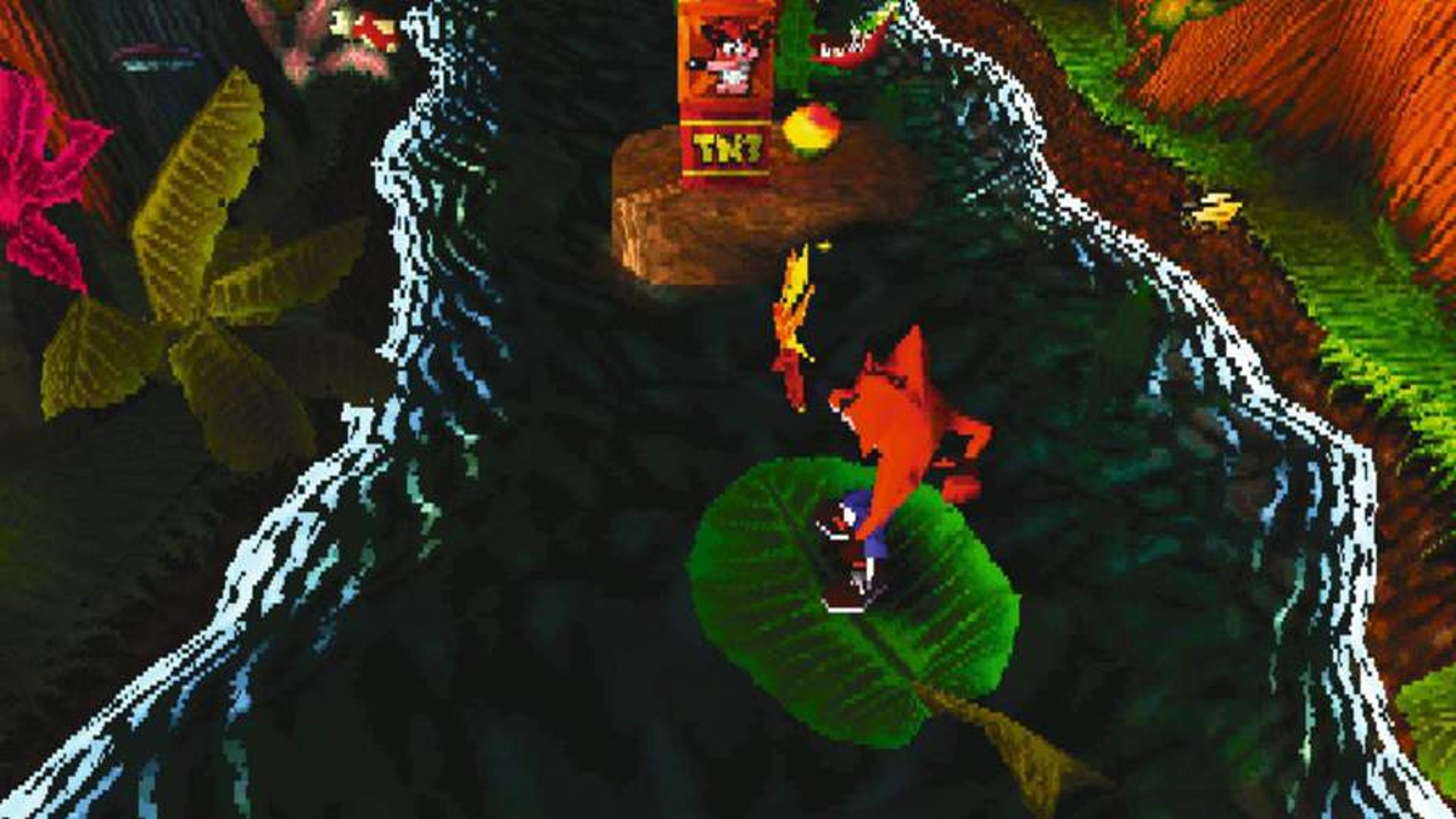
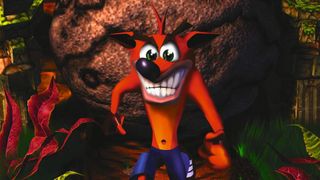
But Crash's aesthetic was more than equitable an idea to take happening Warner Bros; the type itself had been inspired by the Tasmanian Devil himself, from his appearance to his anarchic mental attitude. "Jason Rubin, in his document, had explained that he wanted this wombat role that would run upright, a bipedal character," says Siller. "The whacking influence he had was that helium wanted to model Crash after the Tasmanian Devil." This was a focus for the design of the character, an factor that Jason Rubin had distinct upon from the starting that was tougher to follow out than it might first appear. "Recovered, the Sarcophilus hariisi had no real cervix. The chief kind of just sat on the shoulders, and Jason insisted upon on that. Charles Zembillas [art music director on Crash Bandicoot] told me on a number of occasions that he had a big problem therewith – it didn't lead to good turn animations then forth." He continued to employment on it, notwithstandin, eventually forming the iconic character that is remembered so fondly. "Clang was this hybrid marsupial, Tasmanian Devil spiritual competitor eccentric character. He had no neck, he was a bit more slender but he was Universal's Taz."
Information technology wasn't solitary the visuals that this inspiration helped create, either. Where the Sarcophilus hariisi was well known for his whirlwind craze – an element that was also used in his own 16-bit computer game – Crash had also adopted a similar technique, but evolved to make believe for more rewarding gameplay. "Well Clangour had a shorter, more controlled spin that didn't cause him to go out of verify," says Siller, "and that was developed to be a timed chronological succession and so that the closer you got to an enemy you could reel and knock them out, but if you did it too soon and you bulge out of the spin as you touch that opposition then you would be damaged operating room you would be defeated."
"That morning we went from Willie the Wombat to Clangor Bandicoot. A bandicoot was also a pouch, we righteous switched one for another."
This, many will recall, was the death of umteen a marsupial, and added to the halting's challenge and appeal. Despite the exhilaration from Sony and the obvious timbre of the ware, on that point was nary guarantee of Crash Bandicoot's success. It was exclusive towards the end of development that anyone really believed there could be something outstanding. "The Naughty Andiron guys seemed to be nervous about everything," admits Siller, suggesting that Nintendo's Super Mario 64 was especially unreassuring for the team. "They would go [into the games board] and play Mario 64, they were always concerned about other games. But I felt that our pick-upfield-and-drama gameplay was going to prove to follow popular. I wasn't really upset about it, but there were others there that were."
Towards the end of the game's development and following a plenty of positive coverage in the magazines of the prison term, internal belief in Crash grew, but no ace – Sony included – could let predicted the booming success IT would fetch up becoming. "The reason I wasn't then foreordained that it was going to be special until it came unsuccessful was because we thought there were going to be a lot of similar games. At that place were a lot of competent developers out there, and we were coming out of nowhere, really. Where are the Konamis, the Namcos, the Quartz glass Dynamics? And they all did, they all came out with stuff, but nobody did as soon as we did – and for a long clip – like we did. It took a while for the Crash Bandicoot influence to proliferate into the growth biotic community. And then Crash clones and Clangoring-influenced games were right and left. No, I father't think we knew that it was going away to be that largish. At least I didn't. Mayhap Jason, Andy, and Check off directly knew that it was going to be substantial, and that's why they clamoured to direct all the mention."
Tenseness covert
Retro Gamer
If you want in-depth features on classical video games delivered straight to your door or digital device, subscribe Retro Gamer today.
Non all was well internally at Naughty Dog, however, a hidden history bottom Ram that has been shrouded since its release. Jason Rubin and Andy Gavin, claims Siller, were keen to weaken the bear on that his design and input signal had on the game. "Not only me," says Siller, "but especially me, Charles Zembillas, and Joe Pearson pretty much got pooped on." Zembillas and Pearson were key in the visible aesthetic of Crash Bandicoot, with the pair creating the singular characters while Pearson also created concepts for what the world would reckon like. "And I took those and information technology influenced me to intention gameplay, the design kept going, and evolving. And evening Naughty Dog participated in that after I had shown and proven the way."
After magnified tension for Siller, the straw that broke the back was when he wheel spoke to Mutato Muzika – the company transcription the audio frequency for the gamey – and agreed to include some of their music into Crash. "Intimately apparently that data got back to Naughty Dog and Jason Rubin flew off the handle," says Siller, "and called me into his office, closed the door and started yelling at me and efficacious Pine Tree State that I had no business recounting Mutato Muzika that, expression that Naughty Dog was in charge, and that they were going to run the medicine. I tried to reassure him that I didn't talk to the constrict and that I was only, in as far arsenic Mutato Muzika, a soldier below dominate. I was doing what I was told to suffice. Merely apparently Mark Cerny didn't back me up. At that time he said, 'They don't like you, they lack me to be in charge straight off.' It was the final month or two, and that's what happened."
Despite the feud that had U-shaped, Crash Bandicoot released in November 1996, just a twelvemonth after the release of the PSone and to great critical and technical winner. "As soon as the game came out, Sony knew that IT was a hit," says Siller, the game's unique approach to platform halt design and the attitude of its characters helping to make over a game that was immediately loved by numerous. The series built up such a devoted hearing, as a matter of fact, that the spiritual rebirth of classic PSone-era Clangoring gameplay is one of the biggest request from PlayStation fans. Perhaps now is the right clock time for the world to have a bit more of the orangish marsupial in their lives.
"I cerebrate any time you can prepare a game that allows the superlative number of people to come in and instantly be able to toy it," suggests Siller of how the game surged to popularity and remained so important, "without sophistication or complication, without difficulty and is fun, and IT looks good and has sturdy colour then I think that game will get ahead a big winner. That's the reason Crash became the staple that IT is, because it had altogether those elements."

Source: https://www.gamesradar.com/the-making-of-crash-bandicoot-25th-anniversary/
Posted by: parkeywhicess.blogspot.com
0 Response to "Crash Bandicoot turns 25 – How Naughty Dog turned Willie the Wombat into a PlayStation icon - parkeywhicess"
Post a Comment